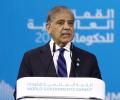
Pakistan Prime Minister Shehbaz Sharif said on Tuesday that his country respects Russia's relations with India, as he called for strengthening Islamabad's ties with Moscow during his talks with Russian President Vladimir Putin in Beijing.
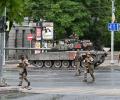
A man from Raipur, Tikeshwar Sahu, who travelled to Russia for a job in September, has reportedly been detained there on "false" drug charges. His family alleges he is being pressured to join the Russian Army to fight in the war or face a long jail term. This incident follows a similar case last month involving another Chhattisgarh man. Sahu's family has sought intervention from the Chhattisgarh Chief Minister's Office and other authorities for his safe return.

Russia's First Deputy Prime Minister Denis Manturov met with Indian leaders to discuss strengthening bilateral ties in key sectors amidst the escalating conflict in West Asia.

Lavrov, who addressed the UN General Assembly shortly before External Affairs Minister S Jaishankar's speech at the high-level General Debate, said India and Russia share a "particularly privileged strategic partnership".
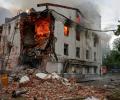
Russia has expressed gratitude for India's readiness to contribute to resolving the Ukraine conflict, while Ukraine's Foreign Minister praised India's ceasefire proposal as the "broadest" among those received. President Putin also acknowledged Prime Minister Modi's "very good ideas" for a mutual settlement, highlighting India's intensified diplomatic efforts focusing on Black Sea safety, grain exports, and energy supplies.

Trump has enacted a new law imposing significant sanctions on Russia and Iran, which could lead to tariffs of up to 100% on major energy importers like India and China.
India has requested an update from Russian authorities regarding 69 Indian nationals reportedly serving in the Russian Army. The External Affairs Ministry spokesperson stated that 139 Indians have been discharged so far, but 51 have died. India continues to warn its citizens against joining the Russian military due to significant dangers.

India and Russia are expected to sign a bilateral mobility agreement during President Vladimir Putin's visit to New Delhi, establishing a framework for legal migration, worker protection, and expansion of skilled Indian manpower in Russia.

Former US Secretary of State Antony Blinken stated that the US must respect India's right to self-defence and maintain a zero-tolerance policy towards terrorism, highlighting the "fundamentally different" nature of Washington's relationships with New Delhi and Islamabad. He described US-India ties as global and strategic, while US-Pakistan relations are regional. Blinken also touched upon cooperation in emerging technologies, India's ties with Russia, rapid global changes, US domestic politics, and the West Asia conflict, advocating for a two-state solution.

President Donald Trump is set to sign the Sanctioning Russia and Iran Act, which includes tariffs on countries buying Russian oil and gas, such as India. India has voiced concerns over the potential impact on its ties with the US and the global energy market.

Putin's State visit will centre on fixing the huge India-Russia trade imbalance, with both sides pushing to lower duties, ease non-tariff barriers, and seal a landmark mobility pact to send more Indian workers to Russia.

US President Donald Trump is expected to sign the Lindsey O. Graham Sanctioning Russia and Iran Act of 2026 later on Friday (local time). A White House official confirmed the development to ANI without revealing further details.

US national Matthew Aaron Van Dyke, arrested with six Ukrainians for illegal entry via Myanmar, claims India imprisoned them for over six months as part of Russia's war against Ukraine. A Delhi court allowed them to travel home for a month, though the NIA's UAPA investigation into alleged drone warfare training for ethnic groups is ongoing.
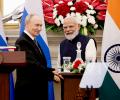
Russia, being bogged down by the Ukraine war and prioritising the requirements of its own armed forces, along with India's consistent diversification policy, will remain a major challenge to the bilateral partnership, note Harsh V Pant and Aleksei Zakharov.

India's Ministry of External Affairs reaffirmed its "very clear" and unchanged position on the Indus Waters Treaty (IWT) during a visit by Pakistan's Minister Musadik Malik to attend the SCO Civilisational Dialogue Forum in New Delhi. This marks the first time a Pakistani minister has been invited to an event in India since military hostilities last year, with Malik's participation seen by some as a potential opportunity for improving bilateral ties within a multilateral framework.

Pakistan's Climate Change Minister Musadik Malik is set to participate in the Shanghai Cooperation Organisation Civilisational Dialogue in India, a move that could signal a thaw in strained bilateral relations.
India is set to host the SCO Civilisational Dialogue Forum in New Delhi from November 20-22, with 15 countries, including China, Kazakhstan, and Iran, confirming participation. Union Culture Minister Gajendra Singh Shekhawat expressed hope for Pakistan's attendance, emphasizing the cultural commonalities despite geopolitical differences. The forum aims to reinforce cultural relations and showcase India's rich civilisational history.

External Affairs Minister S Jaishankar has publicly acknowledged India's intensified diplomatic efforts to resolve the Ukraine conflict, engaging directly with both Kyiv and Moscow. India is focusing on critical issues like Black Sea shipping safety, grain exports, and energy supplies, moving beyond its previous advocacy role. Jaishankar also highlighted India's historical ties with Russia and discussed the evolving global geopolitical landscape, including the repositioning of the US and the rise of China.

'India should not trade away its energy security for temporary tariff relief. Neither signing a trade agreement nor stopping Russian oil purchases can protect it from future US action.'

While remaining cautious of the unpredictability of a bruised Trump administration, New Delhi, and other world capitals, could go slow on the investment pledges made to stave off tariffs.

A three-day hearing in London for Captain Ajay Pant, charged by UK authorities for allegedly violating Western sanctions on Russia, has concluded. Pant pleaded not guilty to charges related to the maritime transportation of oil products. The case involves the seizure of a Russian 'shadow fleet' oil tanker, MV Smyrtos, in June 2026. India's Ministry of External Affairs is in regular contact with UK authorities and Pant's family regarding his well-being.
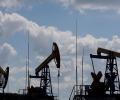
India's Russian crude oil imports reached a five-month low in September, dropping to 1.75 million barrels per day, as Indian refiners strategically diversify their energy supplies amidst evolving geopolitical landscapes and robust domestic demand, according to ship tracking data.

External Affairs Minister S Jaishankar visited Kyiv, reiterating India's readiness to assist in ending the Ukraine-Russia war. He emphasised that solutions would not emerge from the battlefield and highlighted Prime Minister Modi's call for an end to the conflict. Discussions also covered humanitarian aid, the impact on commercial shipping, and bilateral trade, with Jaishankar inviting his Ukrainian counterpart to India for further talks.

Jaishankar said that India and Russia have a long-standing relationship that has certainly served New Delhi's interests well.

US Secretary of State Marco Rubio's visit to India this week underscores the complex dynamics of global energy policy, as Washington re-evaluates sanctions on Russian oil buyers amidst India's continued reliance on Russian crude.
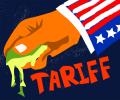
A bipartisan group of US senators has introduced a comprehensive bill imposing extensive sanctions on Russia, with India identified as one of five countries that could incur tariffs for its continued purchase of Russian oil.

Beijing has strongly criticised new US export controls on advanced semiconductor chips to five countries, viewing them as an attempt to prevent diversion to China. This condemnation comes just before US President Donald Trump's visit to Shenzhen for the APEC summit, where geopolitical tensions, including China's opposition to the Quad, are also in focus.
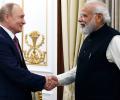
Russian President Vladimir Putin has stated that Prime Minister Narendra Modi possesses "very good ideas" for a mutual settlement of the Ukraine conflict and consistently raises the issue in their meetings. Putin also expressed appreciation for India's cultural diversity and unity, citing Modi's insights on the coexistence of various languages.
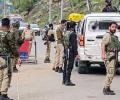
An Army officer's wife has been booked in Jammu for alleged espionage, accused of using AI tools like ChatGPT and Claude to write analytical papers on sensitive national security issues for Chinese intelligence operatives. The well-qualified freelance researcher, who had an IT internship with the UN, is cooperating with investigators after being intercepted at Jammu Tawi railway station. The probe focuses on her alleged contacts with foreign nationals and the nature of the sensitive documents found on her mobile phone.

Russia on Monday assured India of uninterrupted supply of energy and fertilisers amid disruption caused by the West Asia crisis, as External Affairs Minister S Jaishankar met President Vladimir Putin in Moscow and held talks with his key interlocutors.

Prime Minister Narendra Modi inaugurated the first SCO Civilisational Dialogue Forum in New Delhi, emphasising that cultural connections are the strongest guarantee for global peace, especially amidst current global unrest. He highlighted India's ancient trade and cultural routes, stressing that shared civilisational experiences can unite the world. The event, hosted at Purana Qila, showcased India's rich heritage and aimed to foster cultural cooperation among SCO member countries.

'If the temperature remains very high, which is likely to be the case because of El Nino, it may lead to a shortfall in wheat production.' 'If that happens, we will be in a very, very difficult situation as far as food security is concerned.'

Chief of Defence Staff General NS Raja Subramani highlighted on Monday how artificial intelligence, satellite-based intelligence, and mass-produced drones are fundamentally altering modern warfare. He warned that the entire geographical expanse of a nation is now a potential battlefield, making everyone vulnerable. The CDS emphasised the changing economics of warfare, the growing contest for technological superiority, and the expansion of the battle space as key determinants of future conflicts.

Ahead of President Vladimir Putin's visit to India for the BRICS summit, Russia has expressed support for New Delhi's peace initiatives to resolve the Ukraine conflict. Discussions between Putin and PM Modi will cover defence, energy, technology, and the repatriation of Indian nationals from the Russian military, alongside addressing trade and investment ties.

The US senate last week passed a bill that would allow Washington to impose tariffs on major buyers of Russian energy.

Xi's bilateral meeting with Modi was substantial and readouts from both sides gave indications of rapprochement, if not a reset of bilateral relations between India and China, notes Ambassador T P Sreenivasan.

It is an unusual choice to depute a retired general for the funeral of a revered religious figure but a thoughtful one in an attempt to inject verve into the bilateral relationship and restore the equilibrium in India's West Asian policies, notes Ambassador M K Bhadrakumar.

US Secretary of State Marco Rubio kick-started a three-day visit to India on Tuesday to advance bilateral ties in energy, trade and investment, defence, critical technologies, and exchange views on the West Asia crisis.

A recent study has uncovered a new natural process contributing to extreme heatwaves in mid-latitudes, including northwestern India. This process involves a complex interaction between soil moisture, atmospheric pressure, and temperature, which, once a critical temperature threshold is exceeded, creates a vicious cycle leading to even higher temperatures. The findings suggest that current climate models may underestimate future heatwave risks.

India has stated its commitment to protecting its economic interests and ensuring energy security after the US House of Representatives passed a bill allowing the US President to impose tariffs of up to 100 per cent on countries, including India and China, for purchasing Russian crude oil. The Ministry of External Affairs affirmed India's resolve to maintain diversified energy sourcing and has articulated its concerns to US interlocutors regarding the bill's potential implications.
